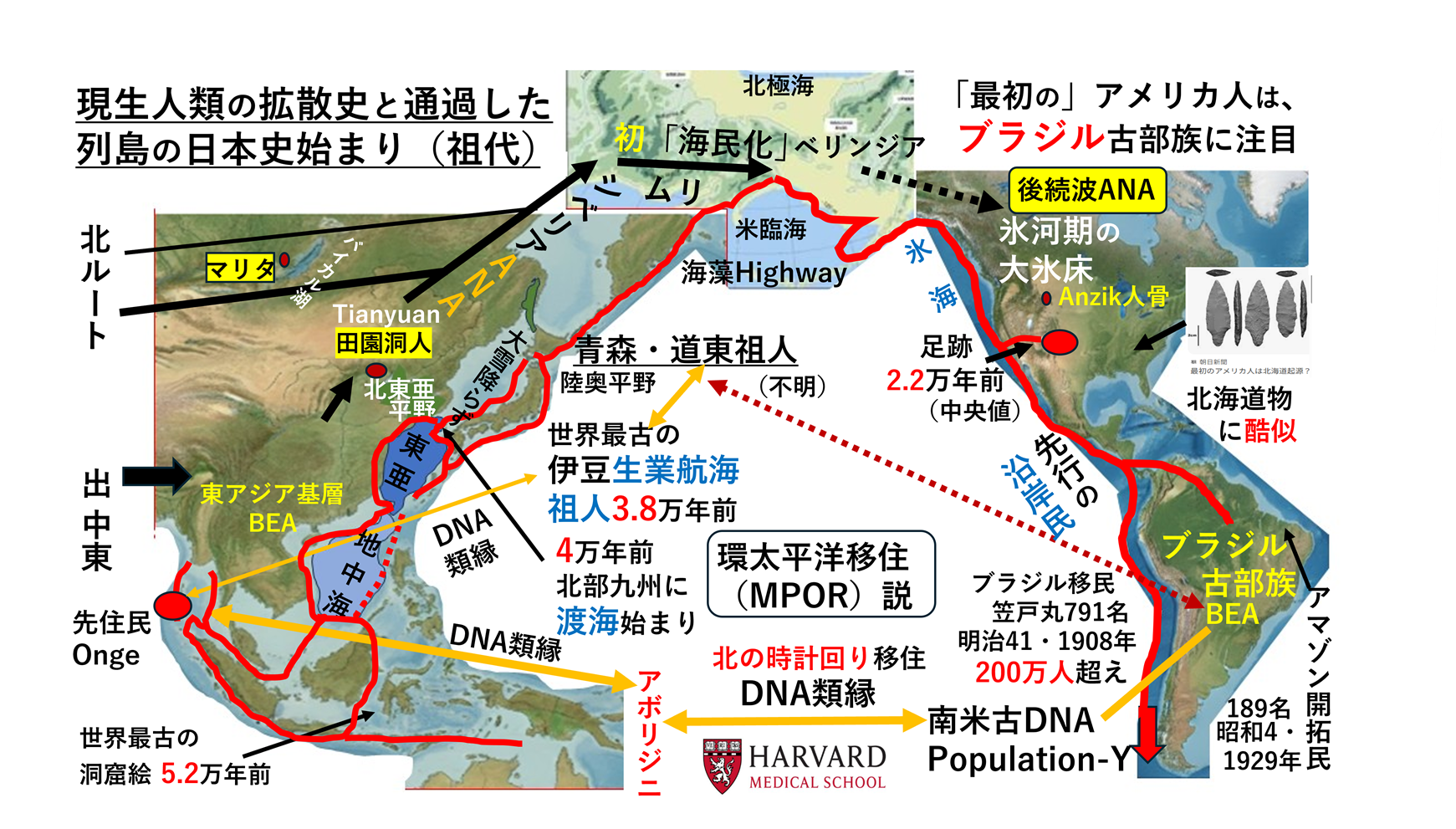
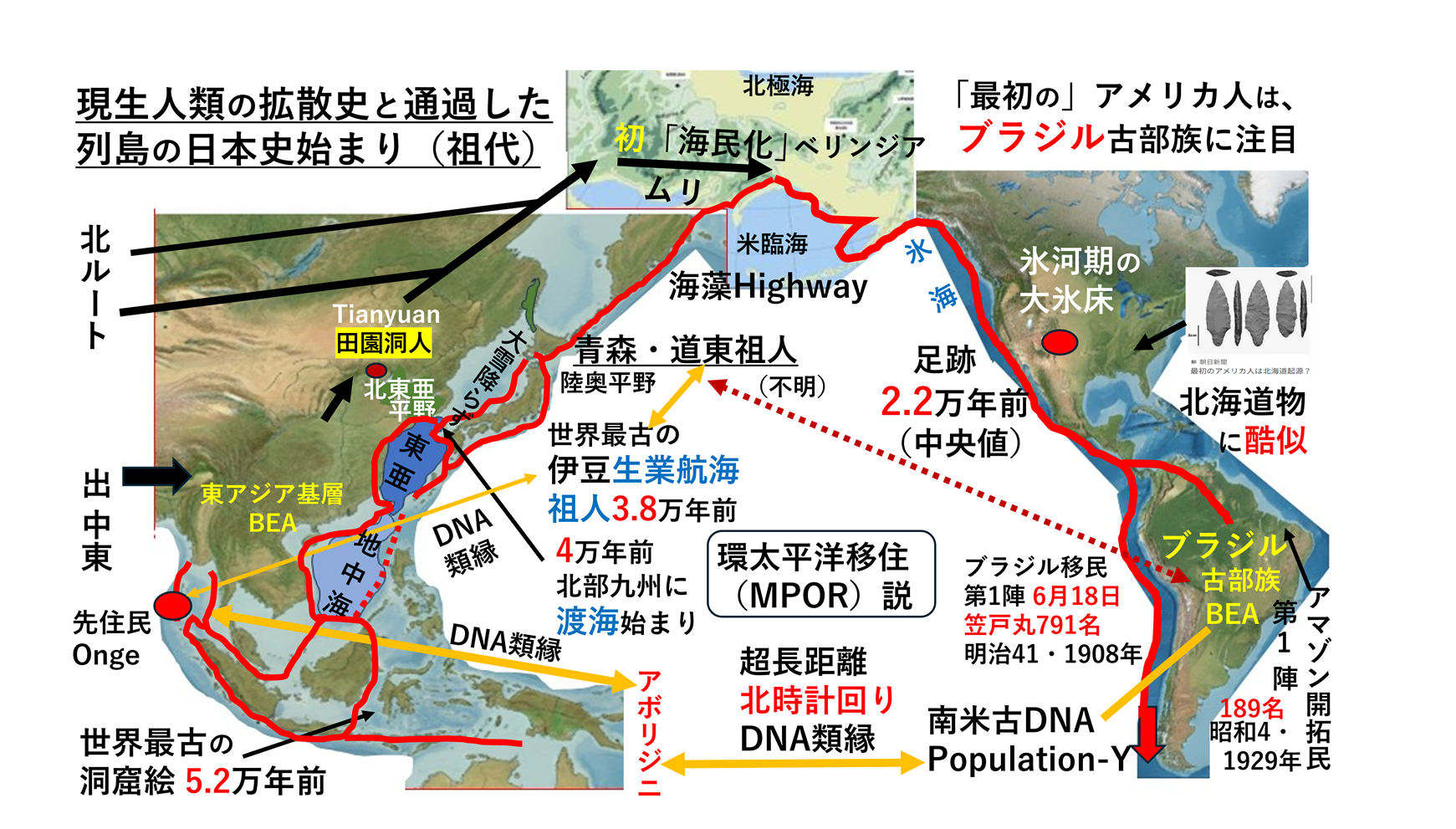
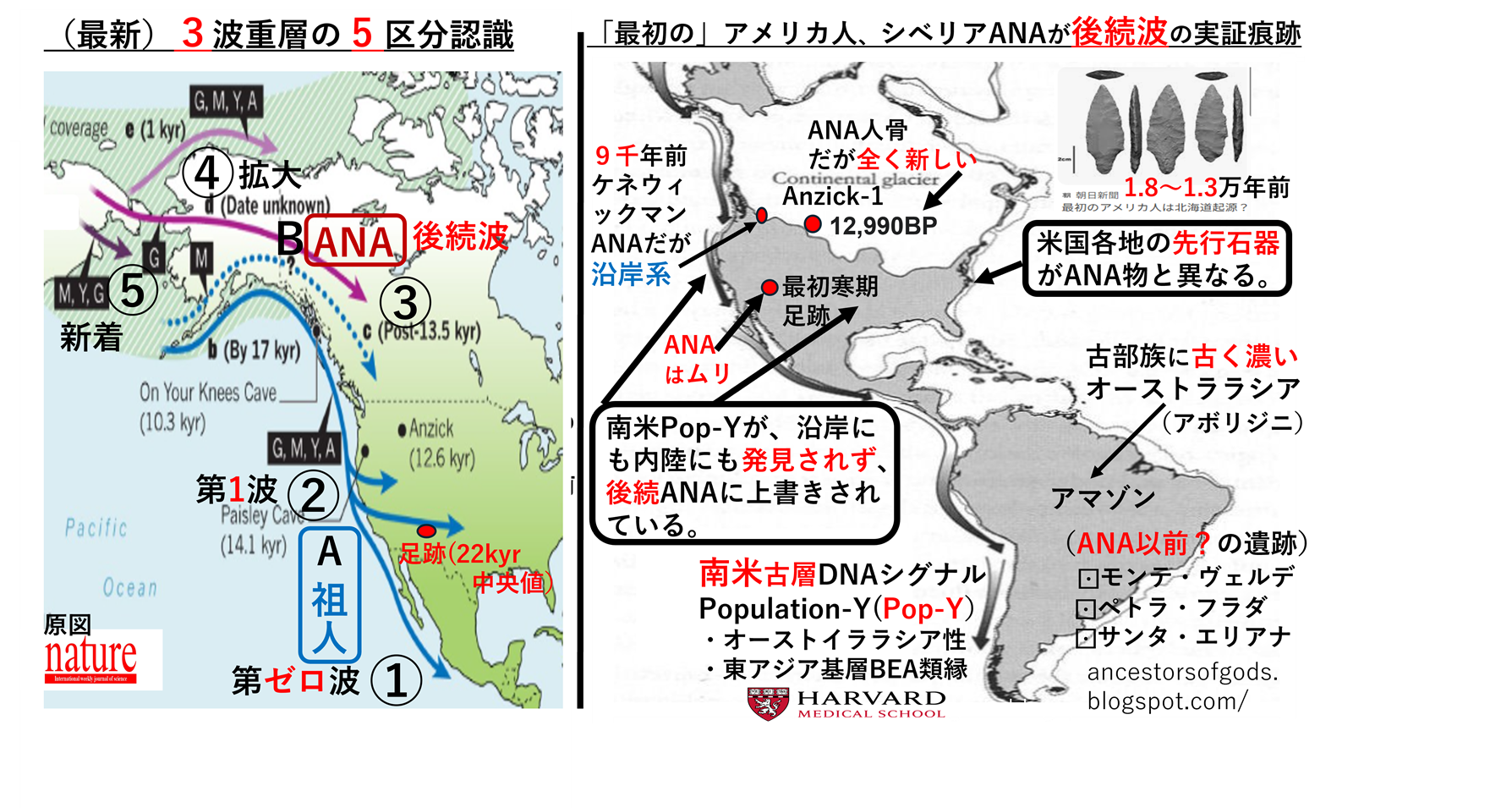
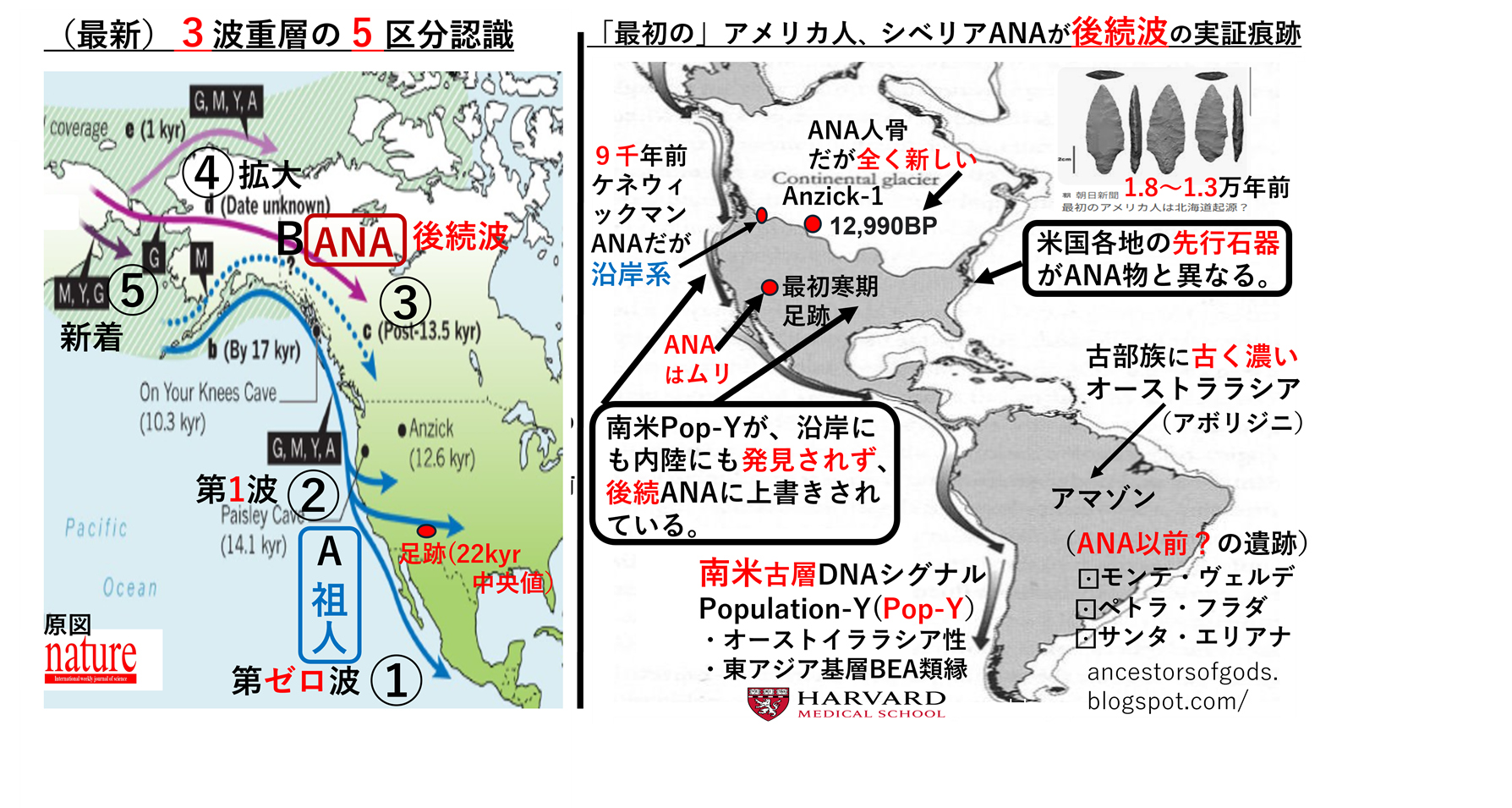
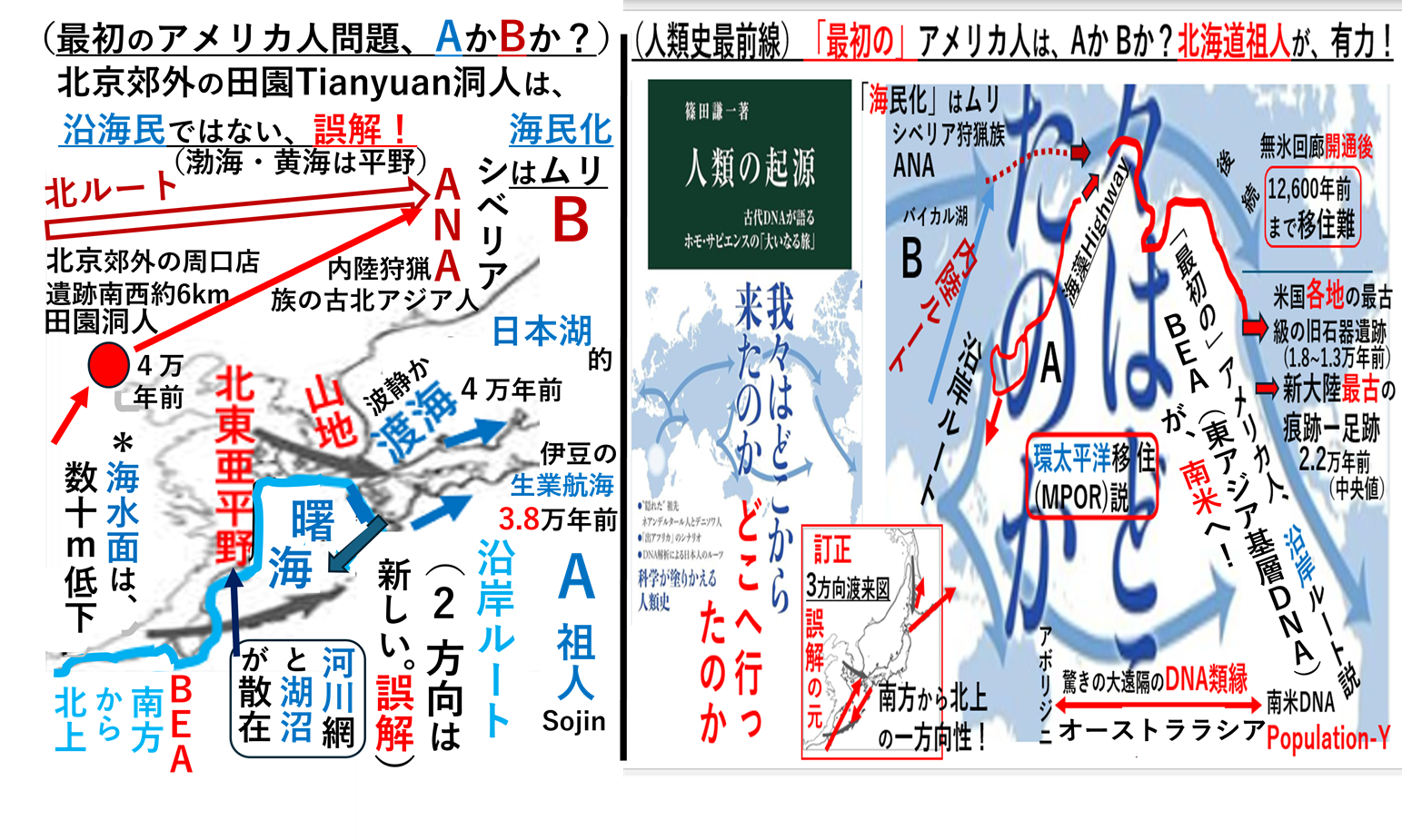
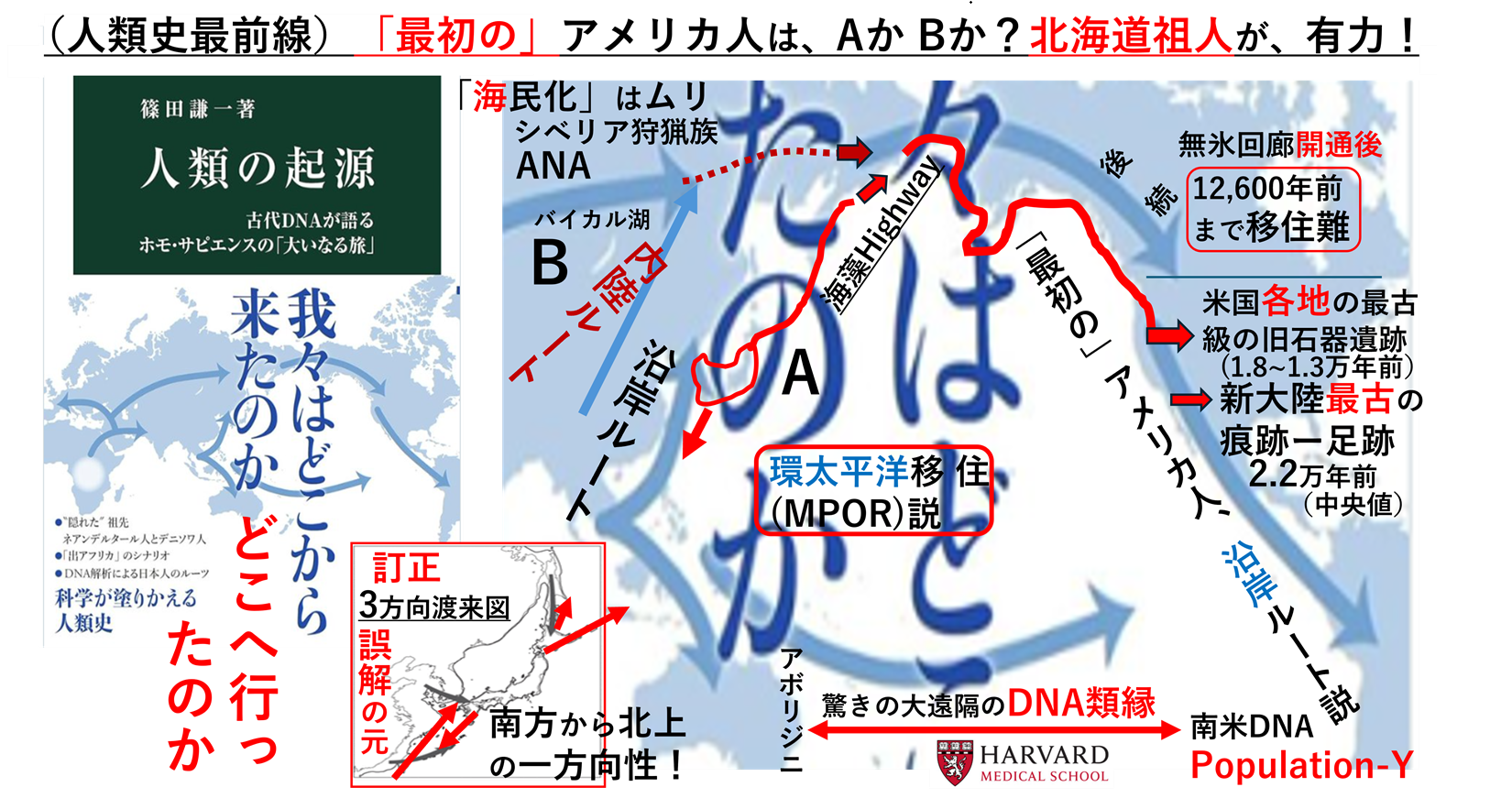
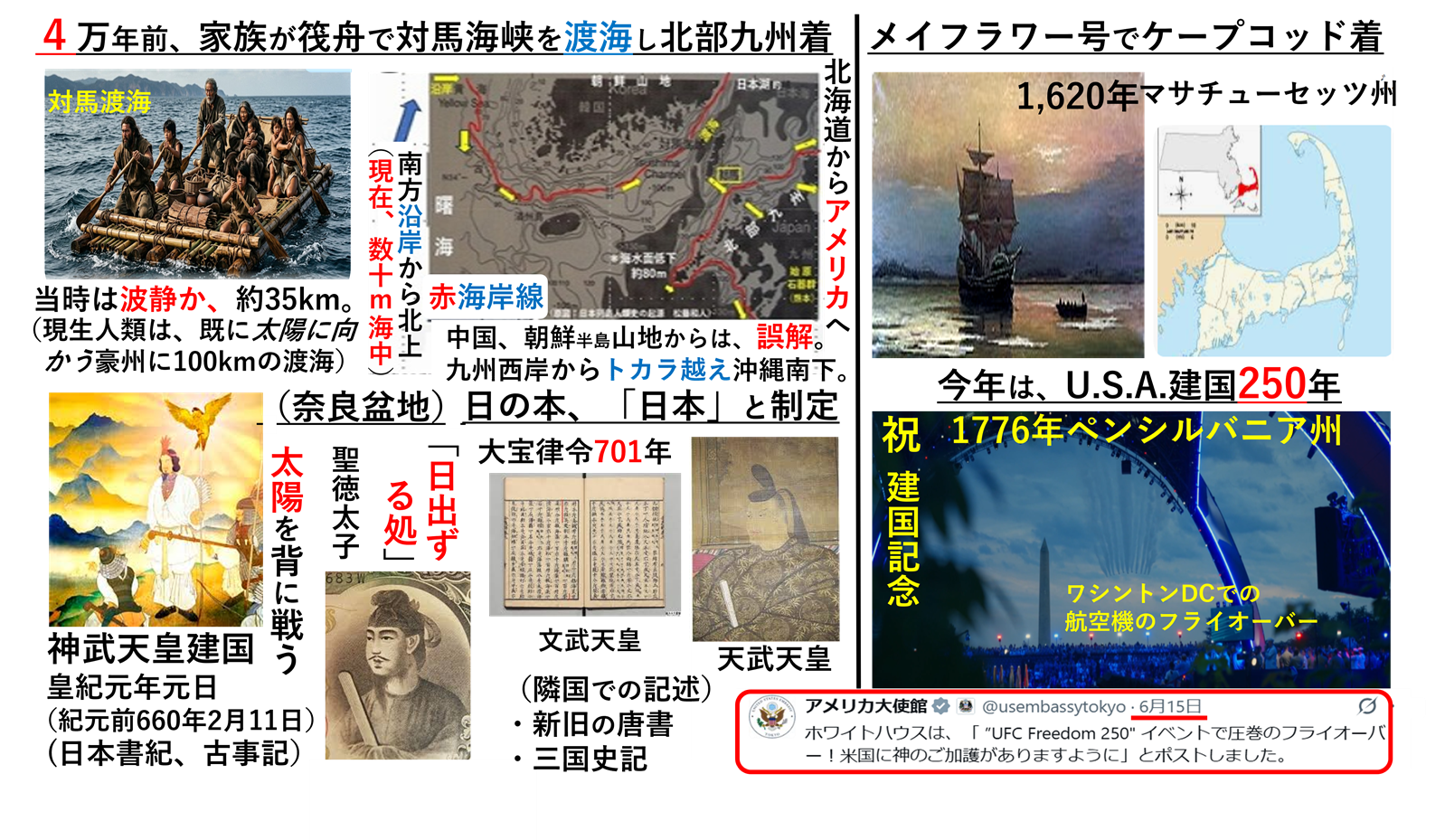
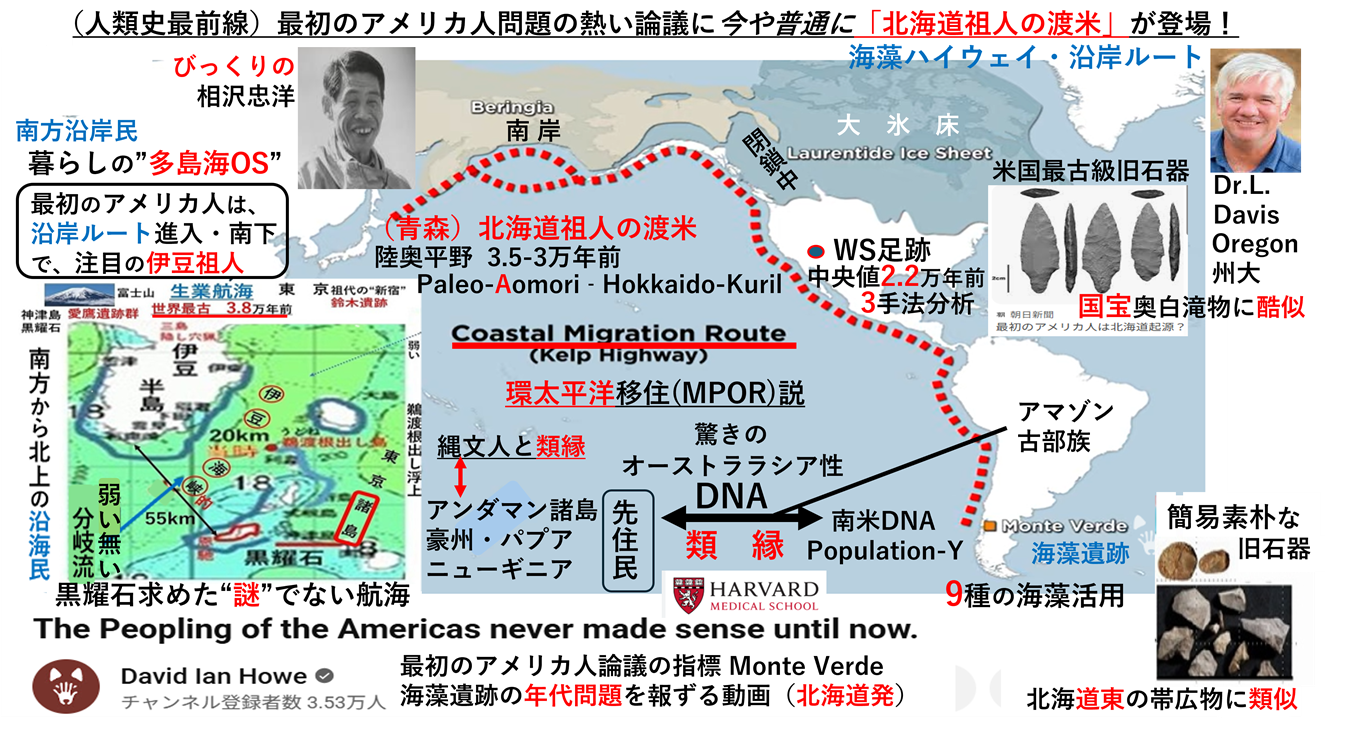
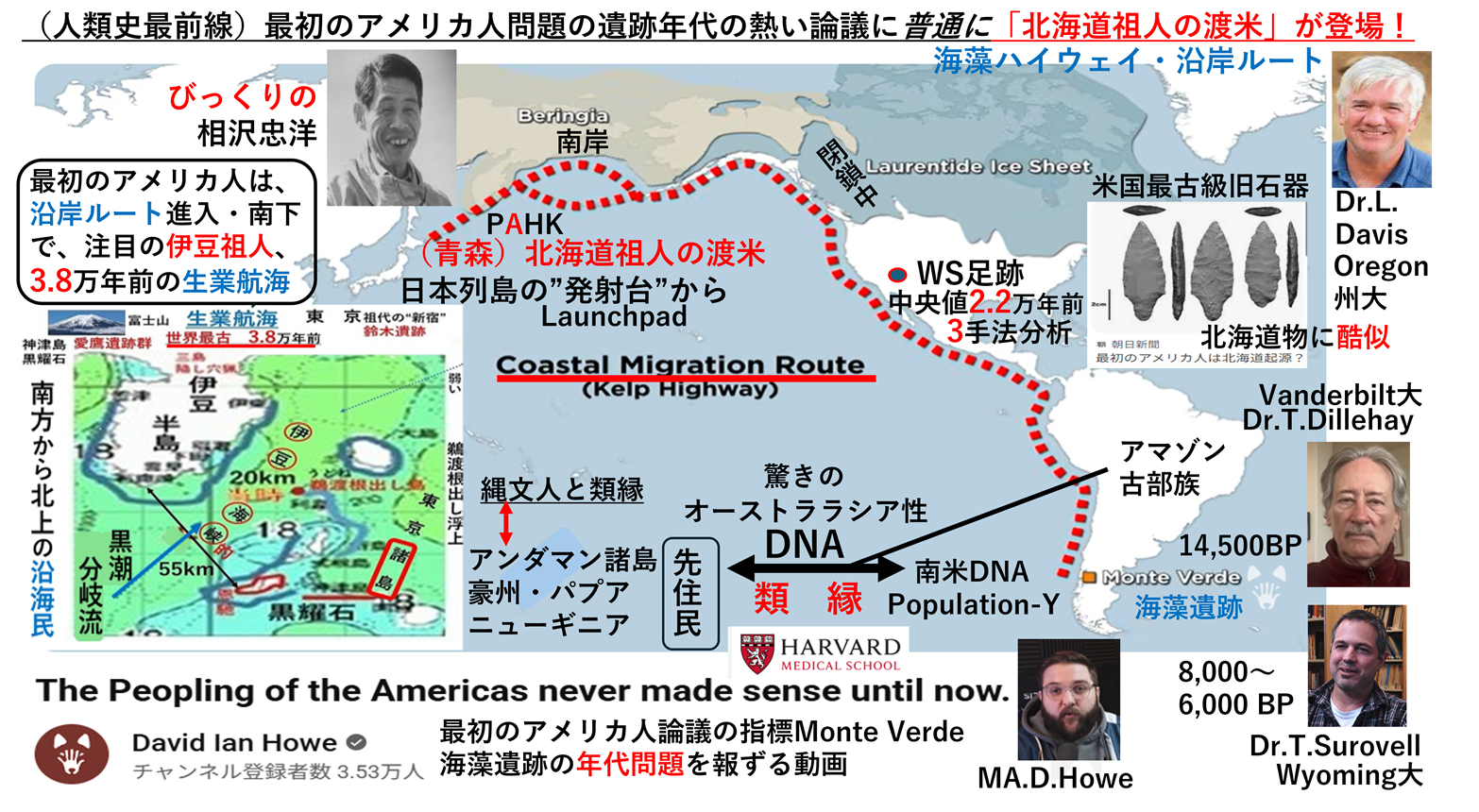
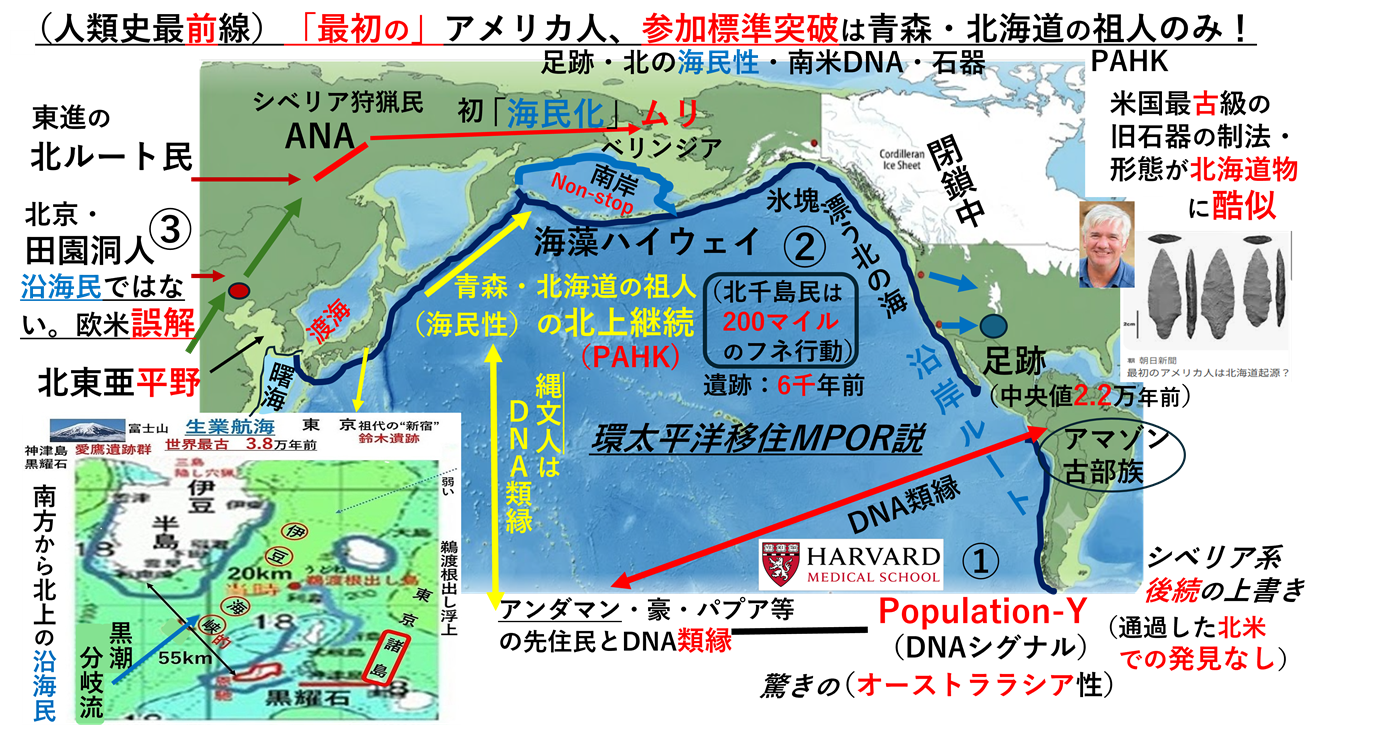
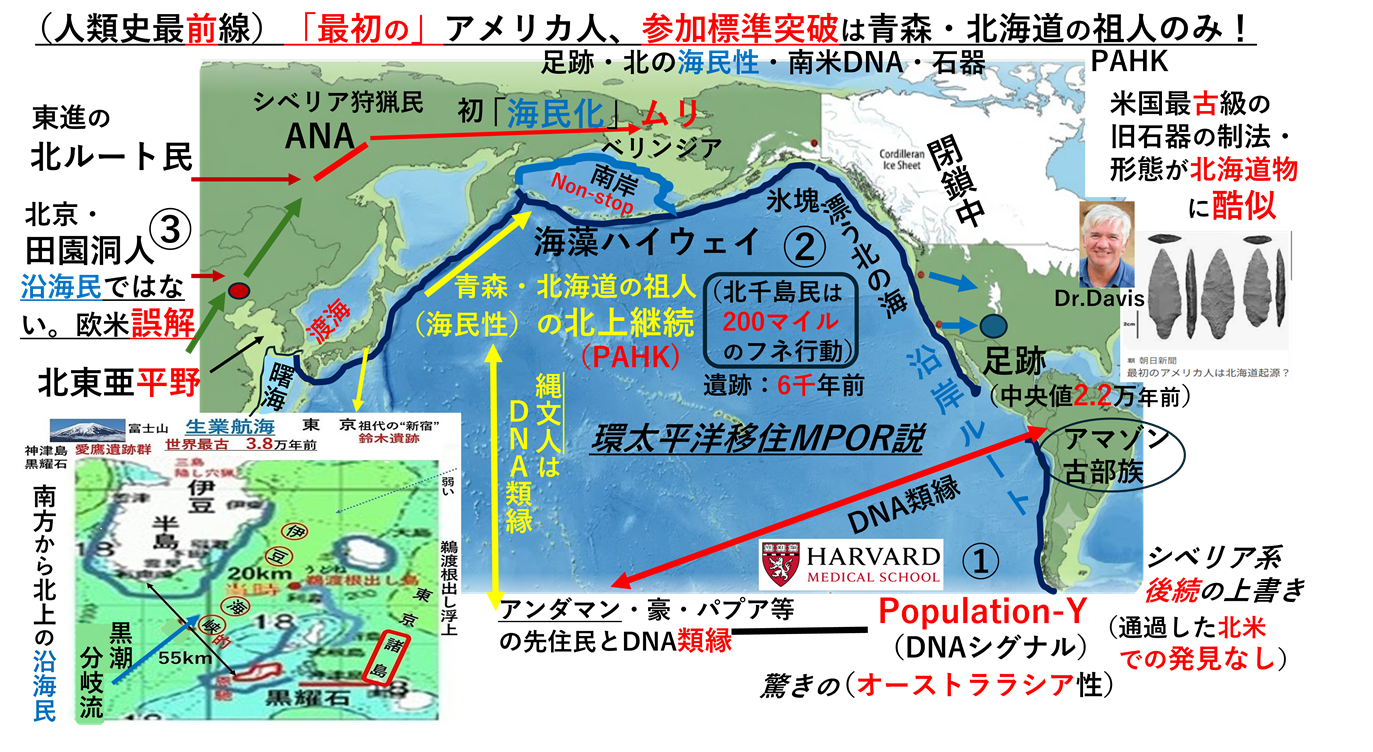
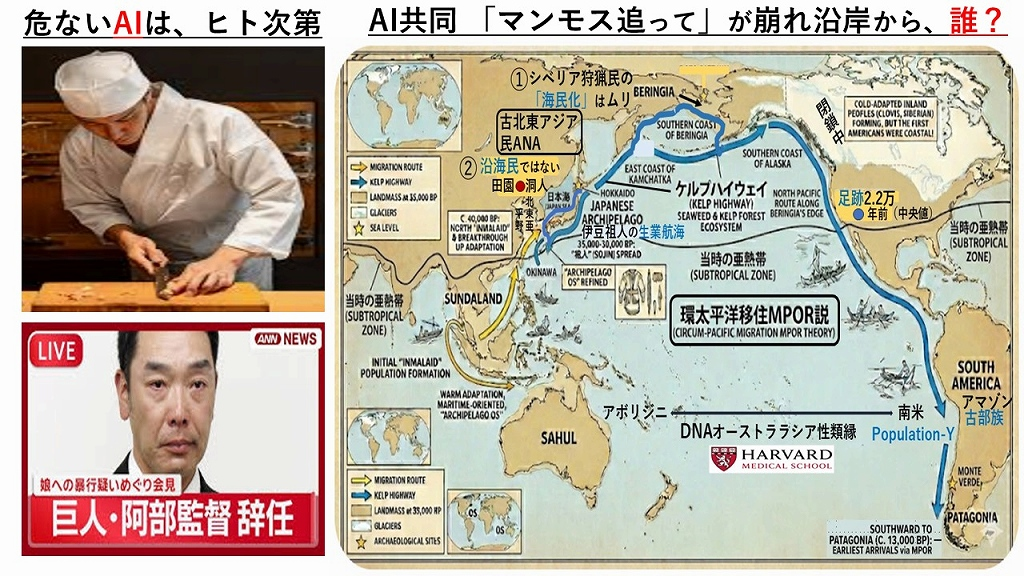
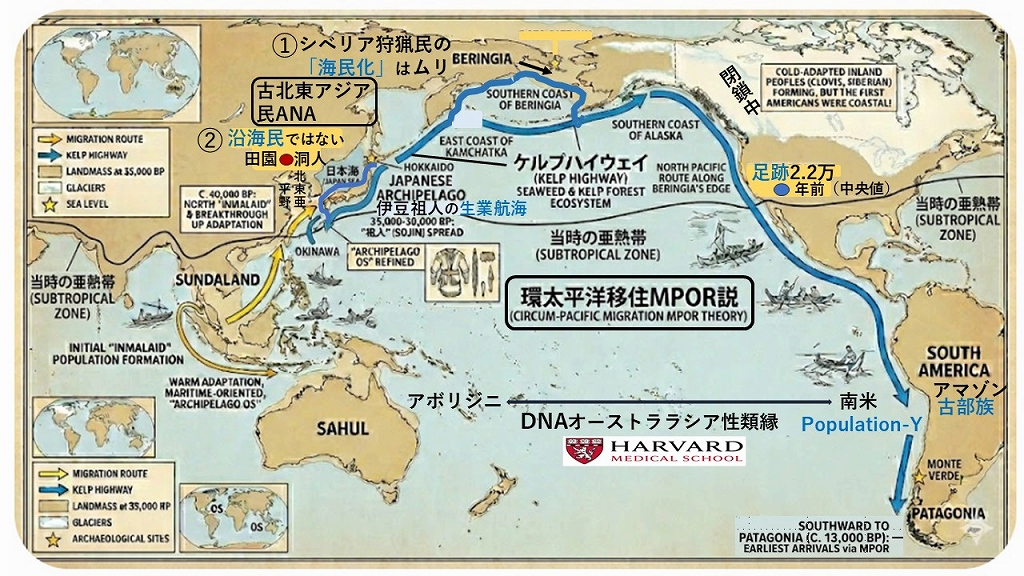
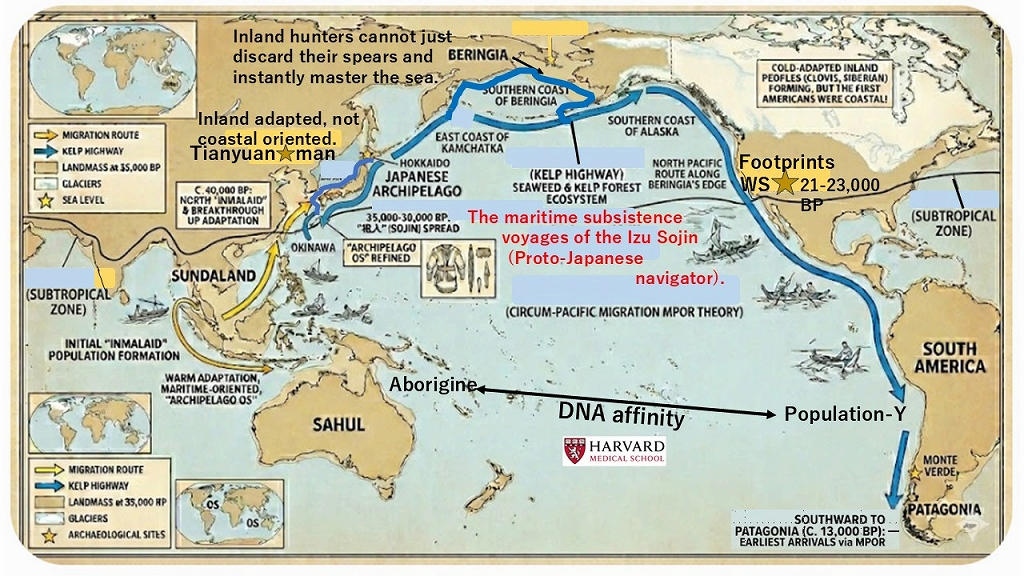
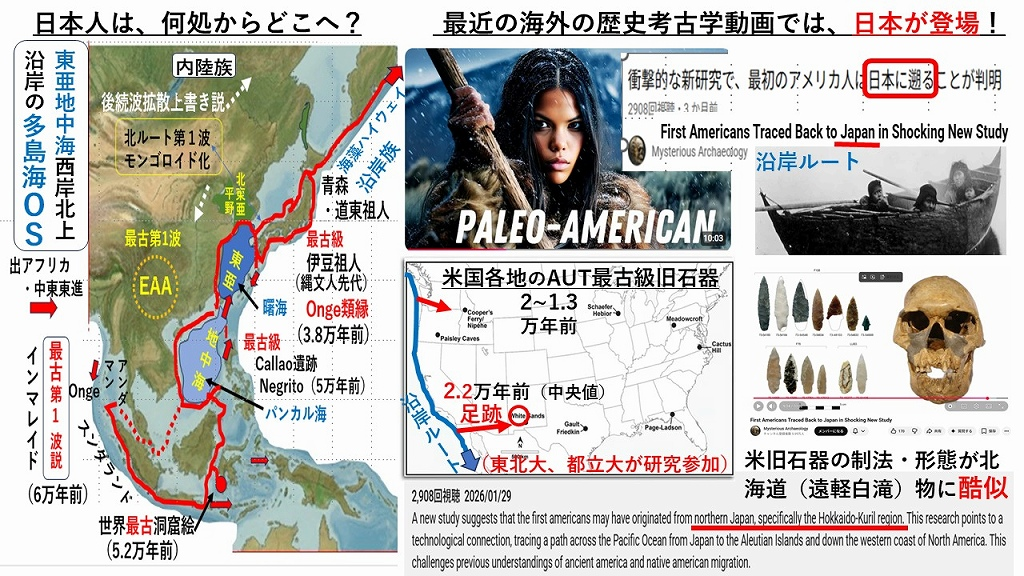
図右A DNA:始まりはアマゾン古部族(その後、南米全域に薄く発見のPopulation-Y)と東部アジアの南方域先住民の驚きのDNA類縁の謎は、北回りの超長距離の移動と東アジア古層EAAの保存であって、祖人sojin・縄文人がDNA類縁性を有しており拡散史の経路上の運搬者だったのです。 B 考古痕跡:南北アメリカの「足跡」の年代(北中央値2.2万年前)は、カナダの無氷回廊が閉鎖中の新大陸西沿岸ルートの南下を示し、米国各地の最古級AUT旧石器は遠軽・奥白滝物と酷似であり、南米遺跡の素朴な石器は帯広物に共通で北海道に注目です。 北海道祖人は、青森・陸奥平野からの伊豆海民(3.8万年前世界最古の生業航海)の子孫であり、樺太から細石刃文化の南下伝播は数千年後です。 C 今と異なった古い環境:そもそも祖人は「曙海」(北部東亜地中海)北岸を時計回りで対馬海峡を渡海した沿岸民で、北部九州ビッグ・バンにより沖縄へ南下、北海道以北に北上しました。 D 海民の暮らし振りと環境:先祖は、南方スンダランドから「東亜地中海」沿岸を北上して来ましたが、そこでは小島の多い多様な暮らしのノウ・ハウとして言わば『多島海OS』を有した「原始人ではない」沿岸民でした。しかも、環太平洋ルートは北太平洋の「海藻Highway」の東西で対称性ある類似の環境に恵まれていましたし、南米にも海藻Highwayと多島海があったため、着実な移住ができ東アジア古層EAAの超長距離の移動後も痕跡を維持し得たもので謎ではないのです。
RSoJS proposes that the “Sojin” (Paleolithic maritime ancestors from Japan) reached the Americas via the Migration along Pacific Ocean Rim (MPOR), challenging the single-wave model. This research integrates DNA (Population Y) and lithic technology.
[Right Side] The Coastal Route and the First Americans Recent DNA analysis showing affinities between Southern Asia and South America, combined with archaeological evidence, increasingly supports the Coastal Route hypothesis. A leading candidate for this movement is the Hokkaido Sojin (originating from the Mutsu Plain in Aomori). Their maritime adaptation and the similarities found in American Paleolithic artifacts highlight the significance of the Coastal Dispersal History of Modern Humans (RSoJS).
[Left Side] The Dual-Structure Dispersal in Eastern Asia Following the “Out of the Middle East” expansion, Eastern Asia was shaped by two distinct waves:
Wave #1 (The Inmalaid Dispersal): Having originated in the Middle East and subsequently starting their migration from Southeast Asia approximately 70,000 years ago, these populations moved northward. They spread throughout the Japanese archipelago, reaching Hokkaido and further north by 35-30,000 years ago.
Wave #2 (The Mongoloid Dispersal): A later, powerful second expansion resulting from the hybridization of Northern-route populations from Central Asia and the earlier northward-moving Inmalaids. These groups underwent physical adaptations to cold climates, developing the Mongoloid features that remain dominant today.
Note on DNA Similarities: This dual-structure model explains the unique, ancient DNA similarities shared between the Japanese archipelago and the remote Eastern Tibetan highlands—often referred to as a “landlocked island.” #祖人
1. Maritime Subsistence and Intelligence (38,000 years ago) The Sojin (Pre-Jomon) engaged in seafaring voyages to remote islands in the Izu region in search of obsidian. This demonstrates the advanced intelligence required for boat building and navigation.
2. Pit-Trap Hunting (35,000 years ago) The use of pit traps reflects high cognitive ability in strategic placement and the physical labor required for excavation without metal tools, suggesting a structured social organization.
3. Social and Spiritual Life (35,000 years ago) Their campsite structures indicate a social and spiritual framework akin to that of Native American cultures.
4. Pioneering Lithic Technology The Sojin utilized “polished” (ground) stone tools approximately 20,000 years earlier than the western world.
5. World’s Oldest Fishing Hooks (23,000 years ago) Evidence shows they were the first to catch fish using hooks, marking the earliest known traces of this technology.
(Conclusion) With the discovery of Australasian DNA (Population-Y) in South America, it is now theorized that the First Americans migrated south along the western coast of the New World. Consequently, the seafaring Hokkaido Sojin have gained significant attention. Their DNA shows affinities with the southern Inmalaid people, leading to the “Pacific Rim Migration Theory.”